Automated Steel Coil Packing Line Guide: From Slitting to Warehouse Efficiency
In the competitive landscape of modern Steel Service Centers, the efficiency of your slitting line is often nullified by the bottleneck at the packaging station. While slitting lines have achieved speeds exceeding 300 meters per minute, many facilities still rely on manual labor to handle, strap, and wrap the finished coils. This disparity creates a dangerous, expensive, and inefficient choke point in your production flow.
If your facility is still relying on manual "C-hook" handling and hand-held strapping tools, you are not just losing time—you are actively bleeding operational costs through excessive labor, potential injury claims, and transit damage.
Drawing from our extensive experience in deploying the Automatic Coil Packaging Line globally, this guide provides a comprehensive, technical breakdown of how to transform your packaging operations from a liability into a competitive asset.
 Figure 1: A fully integrated, high-speed steel coil packing line in operation.
1. The High Cost of Manual Packing: A Data-Driven Analysis
Before diving into the machinery, it is crucial to understand the economic impact of manual packing. A typical slitting line produces narrow slit coils that require individual attention.
The "Hidden" Costs
- Labor Intensity: A manual line typically requires 3-5 operators per shift (crane operator, strappers, wrappers). An automated line requires only 1 system monitor.
- Safety Incidents: Handling steel coils (often with sharp edges) is a leading cause of crush injuries and lacerations. Manual strapping, in particular, poses a high risk of "strap whiplash."
- Quality Consistency: Manual wrapping varies from operator to operator. A loose wrap or insufficient overlap leads to "telescoping" during transport and rust claims from overseas clients.
The Automation Advantage: By implementing a system like the Slit Coil Handling & Packaging Line, facilities typically report a 300% increase in throughput and a reduction in labor costs by up to 80%.
2. Module I: Intelligent Logistics – Turnstile & Down-Ender
The first step in automation is removing the dependency on overhead cranes for every single movement. The goal is to create a buffer zone that allows the slitting line to run continuously without waiting for the packaging crew.
The Capstan Turnstile (Coil Car Interface)
The entry point of the packing line is the 4-Arm Turnstile.
- Function: It acts as a temporary storage buffer. While one arm is being unloaded by the Coil Down-Ender, the other arms can receive new slit coils from the recoiler.
- Capacity: Standard heavy-duty models handle 15T to 30T per arm.
- Automation Logic: The system uses laser sensors to detect the precise position of each slit coil. The Coil Car (transporter) automatically aligns with the slit coil, lifts it, and transports it to the Down-Ender. This eliminates the "swing" and potential damage associated with crane hooks.
The Down-Ender (Upender)
Transforming the coil orientation is critical. Slit coils come off the line with the eye horizontal ("Eye-to-Wall"), but they must be stacked on pallets with the eye vertical ("Eye-to-Sky").
- Technology: We utilize a Hydraulic Down-Ender (see our Industrial Coil Upender).
- Cycle Time: A high-speed hydraulic unit completes the 90-degree tilt in 15-20 seconds.
- Surface Protection: The cradle is lined with industrial-grade Polyamide or Cast Nylon to prevent scratching the outer surface of sensitive materials like color-coated or stainless steel.
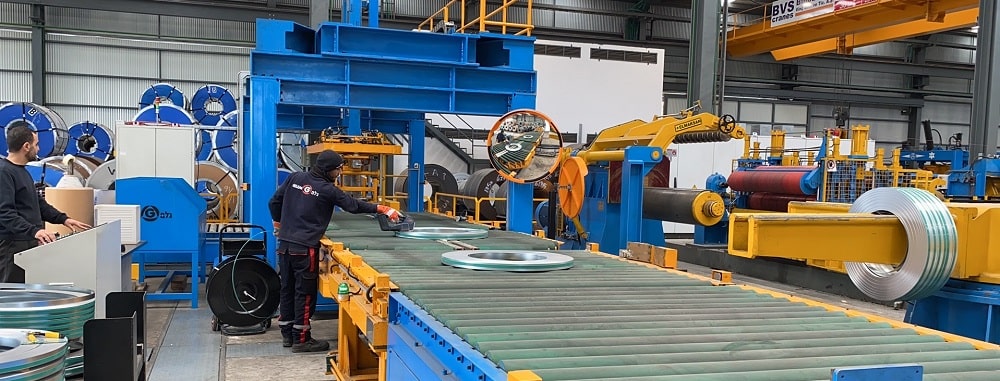 Figure 2: The transition zone – Turnstile feeding into the Down-Ender and conveyor system.
3. Module II: Precision Strapping – The Heart of the Line
Strapping is the most critical process for package integrity. A loose strap means a telescoped coil; a broken strap can result in a catastrophic accident during unloading.
Eye-Through vs. Circumferential
For narrow slit coils, Eye-Through Strapping (Radial Strapping) is mandatory. This involves passing the strap through the center of the coil and around the outside.
The Automated Solution
Our Automatic Slitting Coil Strapping Machine replaces the dangerous manual work.
- Rotation: The coil is placed on a rotary table.
- Indexing: The machine automatically rotates the coil to apply straps at 3, 4, or 6 positions (e.g., at 12, 3, 6, and 9 o'clock).
- The Lance: A specialized retractable lance feeds the strap through the eye of the coil.
PET vs. Steel Strapping: Which to Choose?
| Feature | Steel Strap | PET (Polyester) Strap |
|---|---|---|
| Tensile Strength | High (Best for heavy coils > 5T) | High (Sufficient for most slit coils) |
| Elasticity | Low (Loosens if coil settles) | High (Retains tension even if coil settles) |
| Safety | Sharp edges, whiplash risk | Safe handling, no sharp edges |
| Cost | High | Low (approx. 50% savings) |
| Rust | Can rust and stain the coil | Rust-proof |
Recommendation: For most modern service centers, High-Performance PET Strapping is the preferred choice due to its "Elastic Memory," which keeps the coil tight even as it settles during transport.
 Figure 3: High-precision automated strapping station suitable for copper and steel strips.
4. Module III: "Cocoon" Wrapping – The Rust Firewall
For export orders, simple strapping is insufficient. The Master Coil Orbital Wrapping Machine provides the necessary environmental protection.
The "Cocoon" Technology
The machine applies multiple layers of protective material in a single pass.
- Layer 1: VCI Anti-Rust Paper: Vapor Corrosion Inhibitor (VCI) paper releases molecules that form a protective barrier on the metal surface, preventing oxidation.
- Layer 2: Stretch Film / Woven Plastic: Provides physical protection against abrasion and creates a water-tight seal.
The Mathematics of Protection
To ensure a hermetic seal, the Overlap Rate is critical.
Formula: Overlap (%) = (Film Width - Advance per Revolution) / Film Width × 100
Our PLC systems allow you to digitally set the overlap rate (typically 30% to 50%). The machine automatically adjusts the ring rotation speed and roller conveyor speed to maintain this consistent overlap, regardless of the coil's diameter.
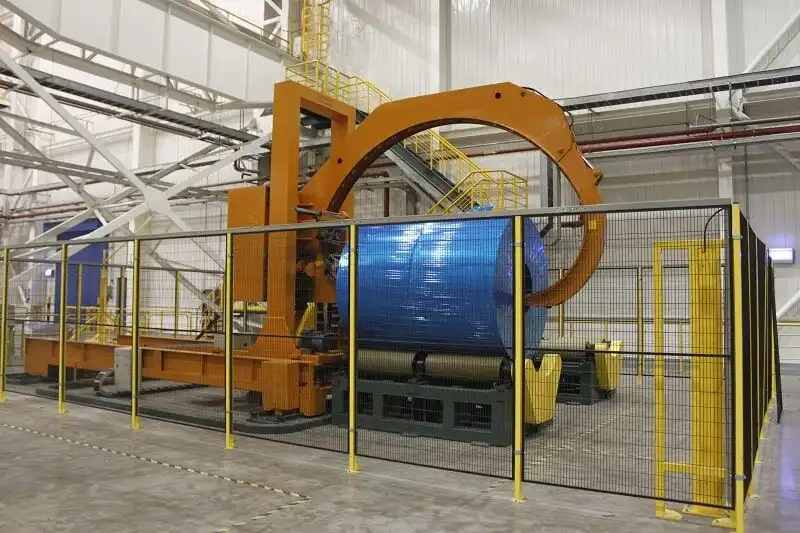 Figure 4: Orbital wrapping ensures 100% surface coverage for sea-freight protection.
5. Module IV: Smart Stacking & Industry 4.0 Integration
The final stage is palletizing. Moving a finished coil to a pallet manually is often done with a forklift or a magnetic crane, but it requires precision to avoid damaging the coil edges.
Magnetic Stacking System
For carbon steel, an Electromagnetic Stacker is the gold standard.
- Precision: The system uses laser centering to pick up the coil and place it on the pallet with ±1mm accuracy.
- Safety: Permanent magnet systems with electric release (Electro-Permanent) ensure that even in a power failure, the coil does not drop.
- Sorting: The system can sort coils by width or OD, placing them on different pallet stations automatically.
Data Traceability (MES/ERP Integration)
In the era of Industry 4.0, your packing line is a data generator.
- Weighing & Labeling: As the coil moves through the line, it is weighed. The system prints a label with the exact weight, coil ID, and customer details, applying it automatically.
- Real-Time Feedback: The Siemens S7-1500 PLC pushes this data to your ERP system (SAP, Oracle, etc.). You know exactly when "Coil #12345" was packed, who approved it, and its gross weight.
6. Return on Investment (ROI) & Conclusion
Investing in a fully automated line is a significant CapEx decision. However, the ROI calculation is straightforward.
The ROI Formula
Formula: Payback Period = Total Investment Cost / (Annual Savings + Productivity Gain)
Typical Savings Breakdown:
- Labor: Reduction of 4 operators/shift × 2 shifts × $40,000/year = $320,000/year savings.
- Material: Switch from steel strap to PET = 20-40% material cost reduction.
- Claims: Elimination of rust/damage claims = Variable but significant.
Most of our clients see a Payback Period of 12 to 18 months.
Conclusion
The transition from manual to automated coil packing is not just about buying machinery; it is about securing the future of your processing center. It guarantees that the high-quality slit coils you produce arrive at your customer's facility in pristine condition, every time.
Ready to Engineer Your Solution? Don't let your packaging line be the bottleneck of your growth.
- Explore our full range of Coil Packing Lines.
- Compare specifications in our Technical Downloads Section.
- Contact Our Engineering Team today for a free layout consultation and ROI assessment.